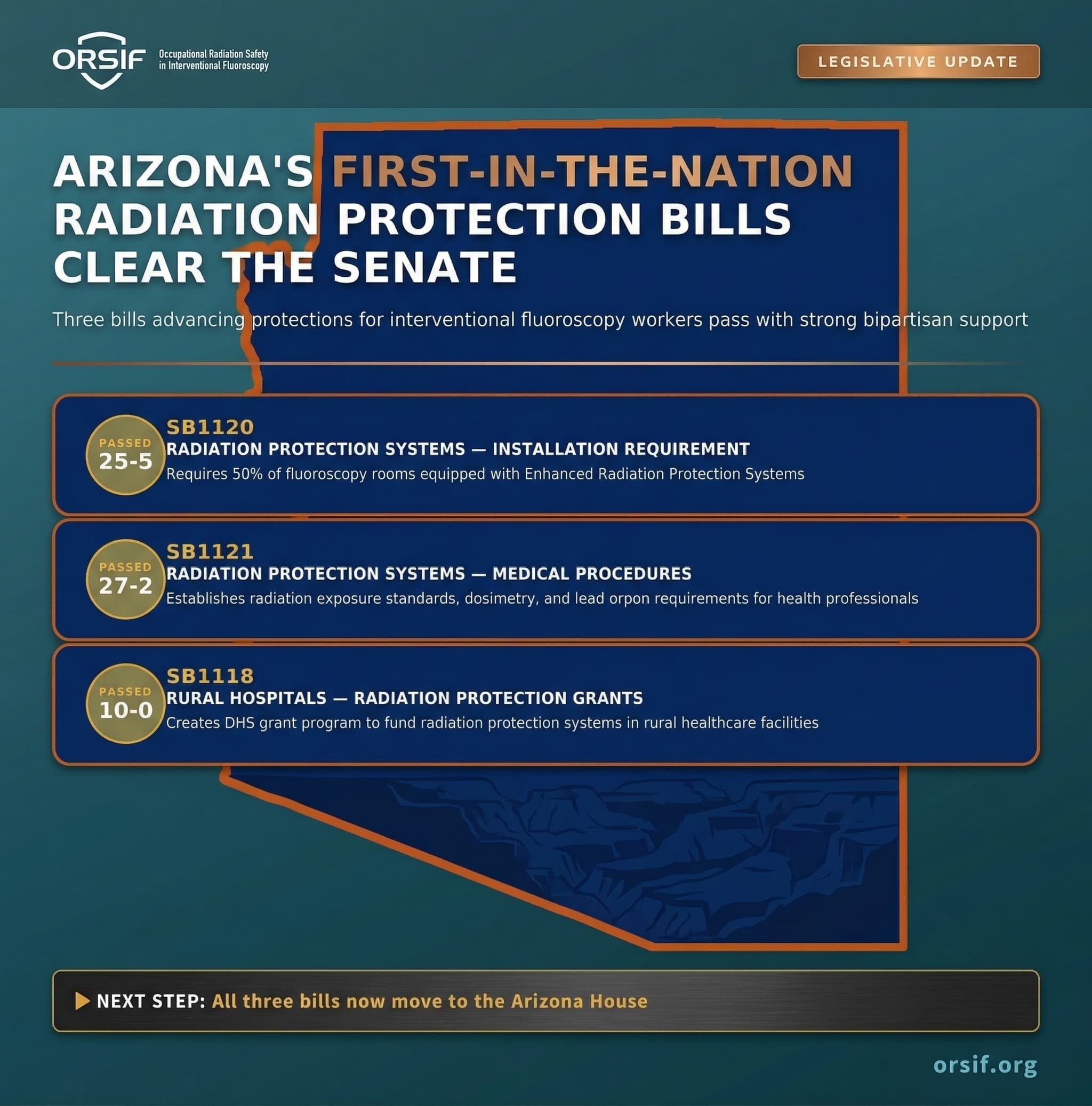
In a landmark development for occupational radiation safety, all three of Arizona's first-in-the-nation radiation protection bills have passed the full Arizona Senate. The bills — SB1120, SB1121, and SB1118 — each cleared the chamber with strong bipartisan support, advancing protections for doctors, nurses, and technicians who work in interventional fluoroscopy environments. All three bills now move to the Arizona House.
The Three Bills and Their Senate Votes
SB1120 — Radiation Protection Systems: Installation Requirement (Passed 25–5): Requires that 50% of fluoroscopy rooms be equipped with Enhanced Radiation Protection Systems. This bill directly addresses the need for modern shielding infrastructure in facilities where interventional procedures are performed daily.
SB1121 — Radiation Protection Systems: Medical Procedures (Passed 27–2): Establishes radiation exposure standards, dosimetry requirements, and lead apron requirements for health professionals working in fluoroscopy environments. This bill creates a comprehensive regulatory framework for monitoring and limiting occupational exposure.
SB1118 — Rural Hospitals: Radiation Protection Grants (Passed 10–0, unanimous): Creates a DHS grant program to fund radiation protection systems in rural healthcare facilities. This bill ensures that healthcare workers in underserved communities are not left behind as protections advance — recognizing that radiation safety should not depend on a facility's size or location.
From Committee Vote to Full Senate Passage
This milestone builds on the momentum from January 2026, when the Arizona Senate Health and Human Services Committee, chaired by Senator Carine Werner, unanimously advanced all three bills out of committee. That historic committee vote signaled broad bipartisan recognition that healthcare worker radiation safety is a public health imperative — and the full Senate vote has confirmed it.
The progression from committee to floor passage reflects the sustained advocacy of healthcare workers, researchers, and organizations like ORSIF who have spent years building awareness of the occupational hazards faced by interventional fluoroscopy professionals.
Why This Matters
Interventional fluoroscopy workers face a dual occupational hazard: cumulative radiation exposure linked to elevated cancer risks, cataracts, and left-sided brain tumors, combined with the musculoskeletal burden of wearing 30- to 40-pound lead protective equipment throughout their careers. Despite these well-documented risks, no state has yet enacted comprehensive protections for this workforce.
Arizona is now closer than ever to becoming the first state in the nation to do so. If these bills pass the House and are signed into law, they will establish a precedent that ORSIF hopes other states will follow.
What's Next
All three bills now move to the Arizona House of Representatives for consideration. ORSIF will continue to monitor their progress and support efforts to ensure they reach the Governor's desk. We encourage our members and the broader interventional healthcare community to stay engaged and to contact their representatives in support of these critical protections.
To the healthcare workers, advocates, and legislators who have made this possible: the full Senate vote is a powerful validation of your efforts. The work continues — and ORSIF will be there every step of the way.