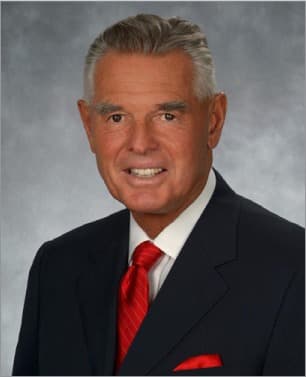
In Memory of
Edward “Ted”
Diethrich, MD
August 6, 1935 – February 23, 2017
Pioneer in Cardiovascular & Endovascular Surgery
“Make it simpler, make it safer”
His Story
Dr. Edward B. “Ted” Diethrich was a revolutionary cardiovascular surgeon who transformed the field of endovascular medicine. From founding the Arizona Heart Institute in 1971 — the nation’s first freestanding cardiovascular clinic — to performing the first nationally televised open-heart surgery in 1983, his career spanned some of the most significant advances in cardiovascular care. His motto, “Make it simpler, make it safer,” guided decades of innovation that saved countless lives.
But the same procedures that made him a pioneer also exposed him to chronic, low-level ionizing radiation in the catheterization laboratory — day after day, year after year. In 2012, after decades of fluoroscopy exposure, he was diagnosed with an oligodendroglioma, a brain tumor directly linked to his occupational radiation exposure. He also developed cataracts in both eyes and dense, calcified plaque in his carotid artery. Determined to protect the next generation, he partnered with ORSIF to create a documentary warning other healthcare workers about the invisible dangers they face every day. He died on February 23, 2017 at the age of 81 — a loss felt across the global medical community.
The Full Story
A Boyhood Dream
Edward B. Diethrich was born on August 6, 1935 in Hillsdale, Michigan. His mother was a surgical nurse, and her influence sparked his lifelong passion for medicine. He earned his undergraduate and medical degrees at the University of Michigan in 1960, where he also played trumpet in the famous Michigan Marching Band.
Training Under DeBakey
After completing his surgical residency at St. Joseph’s Mercy Hospital in Ann Arbor and Henry Ford Hospital in Detroit, Diethrich trained in thoracic and cardiovascular surgery under the legendary Dr. Michael DeBakey at Baylor College of Medicine in Houston. He played a pivotal role in the development of human heart transplantation at Baylor and in 1968 collaborated with DeBakey on a groundbreaking multi-organ transplant case.
Founding the Arizona Heart Institute
In 1971, Diethrich moved to Phoenix to found the Arizona Heart Institute (AHI) and the Arizona Heart Foundation — the nation’s first freestanding outpatient clinic devoted solely to the prevention, detection, and treatment of heart and blood vessel disease. It became a world-renowned center for cardiovascular care and research.
“Ted Terrific”
A 1972 Life magazine profile dubbed him "Ted Terrific" for his surgical brilliance and charisma. In 1979 he established the first outpatient cardiac catheterization laboratory. In 1983 he performed the first nationally televised open-heart surgery, broadcast live across the United States. He also initiated Phoenix’s first heart transplantation (1984) and first heart-lung transplantation in Arizona (1985), and founded the first cardiac ultrasound school (1982).
The Endovascular Revolution
Diethrich became one of the foremost pioneers of catheter-based and endovascular surgery, driven by his motto: "Make it simpler, make it safer." He founded the International Society of Endovascular Specialists and served as founding editor-in-chief of the Journal of Endovascular Therapy. In 2000, he performed the first endovascular aneurysm repair (EVAR) for a ruptured abdominal aortic aneurysm. Over his career he published more than 400 scientific papers and trained over 1,000 surgeons worldwide.
The Toll of Radiation
After decades of near-daily fluoroscopy exposure in the catheterization laboratory, Diethrich developed cataracts in both eyes and dense, calcified plaque in his carotid artery. In 2012 he was diagnosed with an oligodendroglioma — a brain tumor caused by chronic, low-level ionizing radiation exposure. He later reflected: "When we started doing these procedures, nobody questioned what we did. The last thing I was thinking about was how much radiation am I exposed to." He described himself as "a living example of excessive radiation and what it can do to tissue."
A Legacy That Endures
In 1998 he founded the Arizona Heart Hospital. Over his career he founded six companies, including Endologix and the Sarns Company (which produced his invention, the Diethrich sternal saw — a tool still used in open-chest surgery today). In 2015, he partnered with ORSIF to create a documentary warning other healthcare workers about the dangers of occupational radiation exposure. He died on February 23, 2017 at age 81, leaving behind a transformed field of cardiovascular medicine and a powerful call for better radiation safety.
Dr. Diethrich’s Story — ORSIF Documentary
In 2015, Dr. Diethrich partnered with ORSIF to create this documentary about the serious health risks of occupational radiation exposure in fluoroscopy labs — sharing his own story to protect the next generation of healthcare workers.
A Life Beyond Medicine
Ted Diethrich was as dynamic outside the operating room as he was inside it. A gifted musician, he played trumpet in the University of Michigan Marching Band during his college years. He was also an entrepreneur and author who left his mark on multiple fields.
Author
Wrote “SLED” (memoir), “Code Arrest”, “Women and Heart Disease”, and more than 400 scientific papers and several textbooks.
Inventor
Created the Diethrich sternal saw (modified from a Sears & Roebuck tool) — still used routinely in open-chest surgery today.
Entrepreneur
Founded six companies, including Endologix (aortic endografting devices) and the Arizona Heart Hospital (1998).
Sports Owner
Owned USFL football teams — the Chicago Blitz and Arizona Wranglers (1983–84) — bringing professional football to Phoenix.
Legacy of Innovation
The Diethrich sternal saw, which he invented early in his career, remains a standard instrument in cardiothoracic surgery worldwide. His founding of the International Society of Endovascular Specialists and the Journal of Endovascular Therapy helped establish endovascular surgery as a recognized discipline.
The Man We Remember
“When we started doing these procedures, nobody questioned what we did. The last thing I was thinking about was how much radiation am I exposed to.”
“I am a living example of excessive radiation and what it can do to tissue.”
Survived By
His wife Gloria (61 years), son Tad (Terri), daughter Lynne (Joe Jackson), and eight grandchildren who were the pride of his life.
Why His Story Matters
Ted’s story is a stark reminder that even the most celebrated physicians are not immune to the dangers of occupational radiation exposure. After decades of pioneering procedures, the very technology that saved his patients’ lives took his own.
85%
Left-Side Brain Tumors
6.1%
Cancer Incidence
50%
Dosimeter Non-Compliance
These statistics represent real people — physicians like Ted who dedicated their lives to healing others. ORSIF is working to change this through advocacy, education, and legislative action.
Honor Ted’s Legacy
Join the fight for better radiation protection standards for healthcare workers. Together, we can ensure that no more physicians pay the ultimate price for saving others.
Join ORSIF TodayIn loving memory of Edward B. “Ted” Diethrich, MD — a visionary surgeon, an inventor, and a man who dedicated his life to making medicine simpler and safer.
This tribute page was created by ORSIF to honor Ted’s memory and his courageous decision to share his own story to protect the next generation of healthcare workers.
Portrait photo credit: Texas Heart Institute Journal / PMC